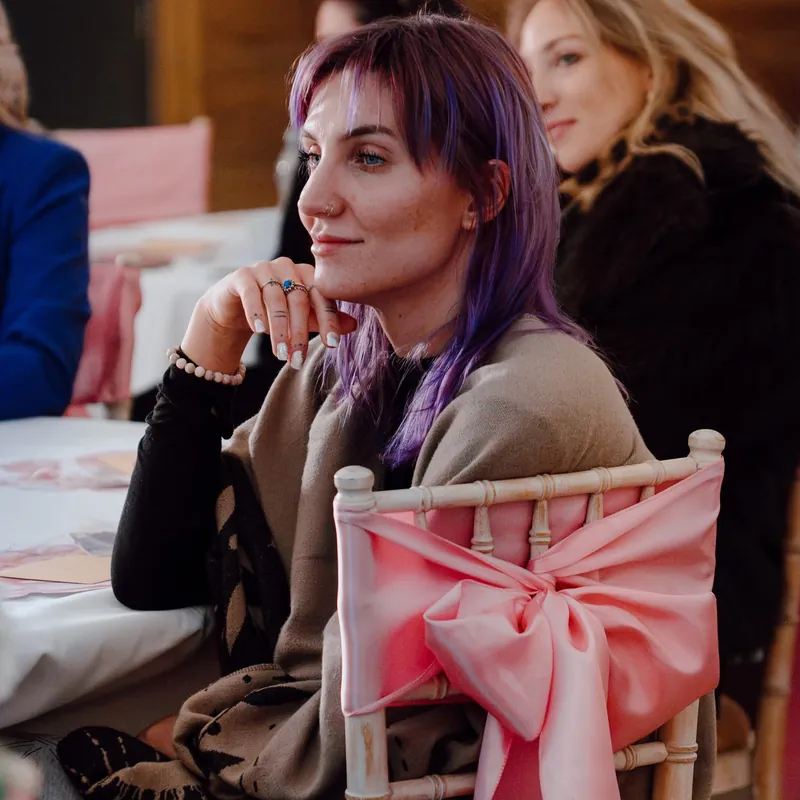
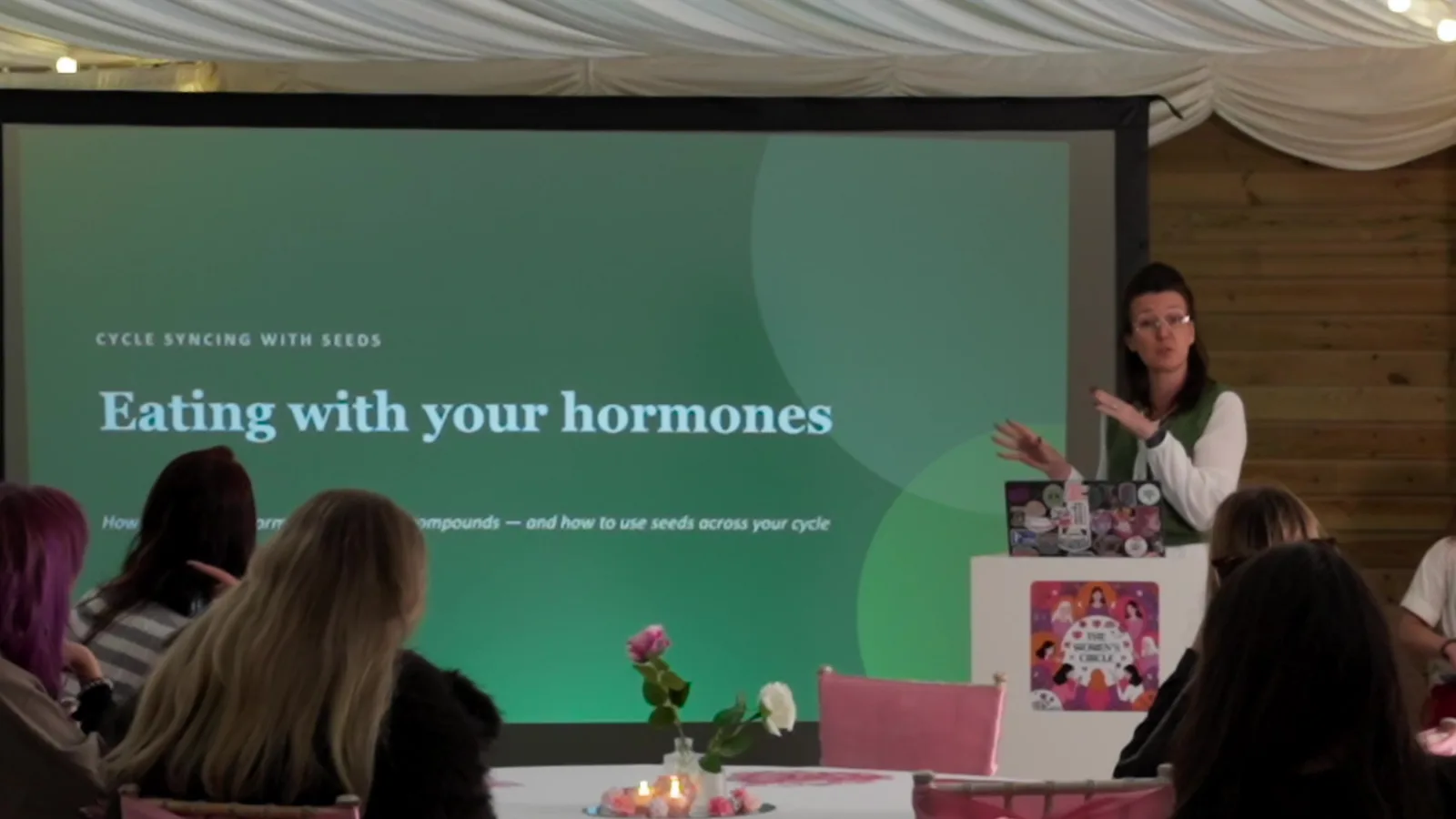
Of all the talks at Circle 2.0, this is the one you’ve asked us about most. Dr Callie Seaman stood up in front of a room full of women and talked us through something most of us had heard of but never really understood: seed cycling, or as she called it, eating with your hormones.
So many of you have messaged since asking for the details that we wanted to write it all down in one place. Everything here comes from Dr Callie’s talk and slides. Keep it, share it, and come back to it whenever you need a reminder.
Plants that speak our language.
Dr Callie started with an idea that will be familiar to many of you. Cannabis produces cannabinoids that mimic our own endocannabinoids, the messengers of the endocannabinoid system (ECS), so they can slot into receptors our bodies already use. Other plants do the same trick with a different body system: some make compounds shaped a lot like our own hormones. Same principle, different system.
Plants make all sorts of compounds, and some of them happen to be shaped a lot like the hormones our own bodies make. The ones that matter here are called phytoestrogens: plant compounds with a structure similar enough to oestrogen that they can interact with the same oestrogen receptors in our bodies.
She described four main families:
- Isoflavones, found in soy and other legumes.
- Lignans, found in seeds like flax, sesame, sunflower and pumpkin. These are the stars of seed cycling.
- Coumestans, found in clover, alfalfa sprouts and split peas.
- Prenylflavonoids, found in hops, and in cannabis too, which is where the two worlds overlap.
Why timing is the whole idea.
This was the part that made the room go “ohhh”. Phytoestrogens are much weaker than the oestrogen your body makes, so what they do depends on what’s already there.
As Dr Callie explained it, when your oestrogen is low, they may give a gentle top-up to the signal. When your oestrogen is high, they compete with your stronger natural oestrogen for the same receptors, which may take the edge off. That two-way, buffering quality is why seed cycling pairs different seeds with different halves of your cycle, rather than eating them all at once.
Your cycle in two halves.
A quick refresher. In the follicular phase (roughly days 1 to 14, starting on the first day of your period), oestrogen rises to build the lining of your womb and mature an egg, peaking around ovulation. In the luteal phase (roughly days 14 to 28), progesterone takes the lead. If there’s no pregnancy, both hormones fall away and your period starts again.
Seed cycling simply matches the seeds to those two halves. If you want the bigger picture, our read The four seasons of your cycle walks through the whole month.
The plan, at a glance.
Flax + pumpkin
- 1 tbsp ground flax seed
- 1 tbsp pumpkin seed
Sunflower + sesame
- 1 tbsp sunflower seed
- 1 tbsp sesame seed (or a spoon of tahini)
If your cycle isn’t a textbook 28 days (and most aren’t), Dr Callie’s tip is to switch seeds at ovulation rather than by the calendar.
Meet the seeds.
Follicular
Flax seed
Dr Callie called flax the star of the first half. It has the highest lignan content of any seed, and our gut bacteria turn those lignans into compounds called enterolactone and enterodiol. It’s also a source of omega-3 and fibre. How to use it: always grind it, because whole flax passes straight through you. Stir a tablespoon into porridge, yoghurt or a smoothie, and keep ground flax in the fridge so the oils don’t go off.
Follicular
Pumpkin seed
Pumpkin seeds contain lignans too, but a gentler amount than flax. Where they really earn their place is nutrition: they’re a standout source of zinc and magnesium, plus iron and healthy fats. How to use them: a tablespoon a day, raw or lightly toasted. No grinding needed. Lovely on salads, in trail mix or blended into pesto.
Luteal
Sunflower seed
The first of the second-half seeds. Sunflower seeds contain lignans plus coumestrol, a coumestan, and they’re rich in vitamin E and selenium. How to use them: a tablespoon a day. Whole seeds or unsweetened sunflower seed butter both work, in yoghurt, oats or a salad dressing.
Luteal
Sesame seed
Sesame has its own unique lignans, called sesamin and sesamolin, which are different from those in the other three seeds. It’s also one of the best plant sources of calcium. How to use it: a tablespoon a day, or a spoon of tahini. Toast it lightly to bring out the flavour and sprinkle it over almost anything savoury.
Eat with your cycle, gently and with curiosity.
The honest bit.
We loved that Dr Callie didn’t oversell this. She was really clear about what we know and what we don’t.
- These seeds genuinely contain lignans.
- Our bodies turn them into active compounds called enterolignans.
- The seeds are nutrient-dense whole foods in their own right.
- The day-by-day seed cycling plan is largely based on experience, not trials.
- There’s little robust research showing it measurably changes hormone levels.
- Any effects are gentle, and it’s not a substitute for treatment.
Her take, in her words: a safe, nourishing habit worth trying, held lightly, not oversold. If you have a diagnosed hormonal condition, that’s a conversation for your GP or specialist, not something seeds can replace. And if you’re pregnant or trying, take any medication, or have a seed allergy (sesame is one of the 14 major food allergens in the UK), check with a healthcare professional first.
We’re a community, not a clinic. This read shares what Dr Callie taught us at Circle 2.0. It’s general information, not medical advice, so speak to your GP or specialist about your own health.
Making it stick.
Dr Callie’s four tips for turning this into something you’ll actually do:
- Two jars, two spoons. Mix a follicular jar (flax and pumpkin) and a luteal jar (sunflower and sesame). Grind the flax fresh and keep both jars in the fridge.
- One tablespoon of each, daily. Consistency matters more than precision.
- Follow ovulation, not the calendar. Switch jars when you ovulate. If your cycle is irregular, use rough two-week blocks and don’t overthink it. Our guide to tracking your cycle can help.
- Fold it into food you already eat. Porridge, yoghurt, smoothies, salads, soups. It should feel like seasoning, not a supplement regime.
🩷We’re a community, not a clinic. Speak to your GP or specialist.
Sources
- Dr Callie Seaman, Cycle Syncing with Seeds: Eating with your hormones, talk and slides at Circle 2.0: The Cycle Edition, October 2026.
- Periods and fertility in the menstrual cycle, NHS.
- Food allergy and intolerance, Food Standards Agency.
About this read
Based on Dr Callie Seaman’s talk and slides at Circle 2.0, written up by The Women’s Circle team with AI support, then checked and approved by Sophie East, Founder of The Women’s Circle. This is general information, not medical advice. How we write.